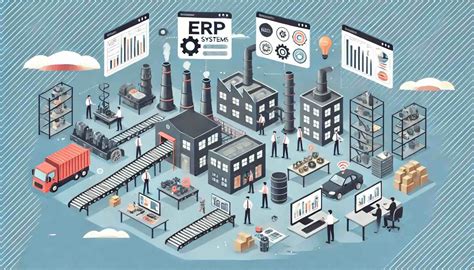
Welcome to the world of small manufacturing, where efficiency is key and every decision counts. In today’s competitive market, small manufacturers face unique challenges in managing production processes, inventory control, and customer relationships. This is where an Enterprise Resource Planning (ERP) system can make all the difference. By streamlining operations, optimizing workflows, and providing real-time insights, an ERP system can help small manufacturers stay ahead of the curve and maximize their potential.
Cost-effective ERP solutions for small manufacturing businesses
Small manufacturing businesses often struggle with finding affordable solutions to manage their operations and increase efficiency. Thankfully, there are cost-effective ERP (Enterprise Resource Planning) systems that cater specifically to the needs of small manufacturers. These systems offer a wide range of features designed to streamline processes, improve productivity, and reduce costs.
One of the key benefits of using an ERP system for small manufacturing businesses is the ability to centralize all data and information in one place. This eliminates the need for multiple software programs and manual processes, which can be time-consuming and prone to errors. By integrating all aspects of the business into one system, employees can access real-time data and make informed decisions quickly.
Additionally, cost-effective ERP solutions for small manufacturing businesses often come with customizable features that can be tailored to fit the specific needs of the company. This flexibility allows businesses to scale the system as their operations grow, without having to invest in a completely new ERP system. This adaptability is crucial for small manufacturers looking to expand or diversify their offerings without breaking the bank.
Another important aspect of cost-effective ERP solutions for small manufacturing businesses is the ability to automate repetitive tasks and workflows. By streamlining processes such as inventory management, production scheduling, and order tracking, businesses can reduce manual errors and increase efficiency. This not only saves time and resources but also improves overall productivity and customer satisfaction.
Furthermore, many cost-effective ERP systems for small manufacturing businesses offer cloud-based hosting options, which can significantly reduce upfront costs and maintenance expenses. Cloud-based ERP systems are accessible from any device with an internet connection, making it easier for employees to collaborate and work remotely. This level of accessibility is especially beneficial for small manufacturers with limited IT resources or remote team members.
In conclusion, cost-effective ERP solutions for small manufacturing businesses provide a wide range of benefits that can help improve operations, increase efficiency, and reduce costs. By centralizing data, offering customizable features, automating tasks, and providing cloud-based hosting options, these systems offer a comprehensive solution for small manufacturers looking to compete in today’s fast-paced market. Investing in a cost-effective ERP system is a smart decision for small manufacturers looking to stay ahead of the competition and grow their business.
Streamlining business processes with ERP systems
Small manufacturing companies often face challenges in managing their operations efficiently due to limited resources and a high level of complexity in their processes. This is where ERP systems come in to help streamline the business processes and improve overall efficiency.
ERP systems offer a centralized platform that integrates various functions of a manufacturing company, such as inventory management, production planning, scheduling, and order processing. By consolidating all these processes into one system, businesses can eliminate the need for manual data entry and reduce the risk of errors.
With ERP systems, small manufacturing companies can also improve communication and collaboration among different departments. For example, sales orders can be seamlessly transferred to the production department, ensuring that orders are processed promptly and accurately. This level of integration helps in reducing lead times and improving customer satisfaction.
Another benefit of using ERP systems in small manufacturing companies is improved inventory management. The system provides real-time visibility into inventory levels, allowing businesses to optimize their stocking levels and reduce carrying costs. This in turn helps in preventing stockouts and overstock situations, leading to better cash flow management.
ERP systems also offer advanced reporting and analytics capabilities, allowing businesses to track key performance indicators and make data-driven decisions. With access to real-time data, small manufacturing companies can identify trends, spot inefficiencies, and take corrective actions promptly. This level of visibility helps in improving operational efficiency and driving growth.
Furthermore, ERP systems help in standardizing and automating processes, reducing the dependency on manual interventions. By defining workflows and setting up automated alerts, businesses can ensure that tasks are completed on time and according to predefined standards. This not only improves efficiency but also helps in maintaining consistency in operations.
In conclusion, ERP systems play a crucial role in streamlining business processes for small manufacturing companies. By providing a centralized platform for integrating functions, improving communication, enhancing inventory management, enabling advanced reporting, and automating processes, ERP systems help in optimizing operations and driving growth. Small manufacturers can leverage the benefits of ERP systems to stay competitive in the market and deliver value to their customers.
Implementing ERP software to improve productivity in small manufacturing companies
Implementing an ERP system in small manufacturing companies can have a significant impact on productivity and efficiency. ERP software streamlines business processes by integrating various functions such as inventory management, production planning, and supply chain management into one cohesive system. This centralized approach allows for better visibility and control over operations, leading to improved decision-making and ultimately, increased productivity.
One of the key benefits of implementing ERP software in small manufacturing companies is the automation of repetitive tasks. By automating processes such as order processing, invoicing, and inventory tracking, employees can focus on more value-added activities, leading to higher productivity levels. Additionally, ERP software reduces the likelihood of errors that can occur with manual data entry, further improving efficiency.
Furthermore, ERP software provides real-time data and analytics that can help small manufacturing companies make informed decisions. By having access to up-to-date information on key performance indicators such as production output, inventory levels, and supply chain status, managers can identify areas for improvement and implement strategies to increase productivity.
Another advantage of implementing ERP software is the ability to optimize production planning and scheduling. With an ERP system, small manufacturing companies can better allocate resources, track production progress, and identify bottlenecks in the production process. This leads to smoother operations and increased productivity as tasks are completed more efficiently.
Additionally, ERP software can enhance collaboration and communication within small manufacturing companies. By providing a centralized platform for employees to access important information and communicate with colleagues, ERP software can improve teamwork and coordination, leading to higher productivity levels.
In conclusion, implementing ERP software in small manufacturing companies is a strategic move that can significantly improve productivity and efficiency. By automating processes, providing real-time data and analytics, optimizing production planning, and enhancing collaboration, ERP software can help small manufacturing companies streamline their operations and achieve greater success in today’s competitive business environment.
Key features to look for in an ERP system tailored for small manufacturers
When choosing an ERP system for a small manufacturing business, it is important to look for key features that can help streamline operations, improve efficiency, and drive growth. Here are some key features to look for in an ERP system tailored for small manufacturers:
1. Scalability: A good ERP system for small manufacturers should be able to scale with the business as it grows. This means that the system should be able to handle increased data volume, transactions, and users without sacrificing performance. Look for an ERP system that offers flexible pricing plans or modules that can be added as needed to accommodate growth.
2. Inventory management: Effective inventory management is crucial for small manufacturers to minimize stockouts, reduce excess inventory, and optimize production schedules. Look for an ERP system that offers real-time visibility into inventory levels, automated stock tracking, and forecasting tools to help you manage inventory efficiently.
3. Production planning and scheduling: An ERP system tailored for small manufacturers should offer production planning and scheduling tools to help optimize production processes and ensure on-time delivery. Look for features such as drag-and-drop scheduling, capacity planning, and production tracking to streamline production workflows and improve operational efficiency.
4. Quality control and compliance: Quality control is essential for small manufacturers to ensure that products meet industry standards and customer expectations. Look for an ERP system that offers quality control modules with features such as product testing, inspection tracking, and compliance management. These features can help you maintain consistent product quality, comply with industry regulations, and minimize the risk of costly rework or recalls.
Overcoming challenges of implementing ERP in a small manufacturing environment
Implementing an Enterprise Resource Planning (ERP) system in a small manufacturing environment can be a daunting task. Small manufacturers often face unique challenges that larger organizations do not encounter. However, with proper planning and preparation, these challenges can be overcome to ensure a successful implementation of an ERP system.
1. Limited resources: One of the biggest challenges for small manufacturers is having limited resources, both in terms of budget and manpower. Implementing an ERP system can be a significant investment, and small manufacturers may not have the financial resources to dedicate to such a project. Additionally, small manufacturers may not have dedicated IT staff to support the implementation process.
2. Resistance to change: Implementing an ERP system requires a significant change in business processes and workflows. Employees may be resistant to change, especially if they are used to working with manual processes or legacy systems. It is important for management to communicate the benefits of the ERP system and involve employees in the implementation process to mitigate resistance.
3. Lack of expertise: Small manufacturers may not have the expertise in-house to implement an ERP system. This can result in a longer implementation process and potential errors in configuration. It is important for small manufacturers to work with third-party consultants or vendors who have experience in implementing ERP systems in similar environments.
4. Integration with existing systems: Small manufacturers may have existing systems in place that need to be integrated with the new ERP system. This can be a complex process, especially if the existing systems are outdated or not compatible with the ERP system. It is important for small manufacturers to conduct a thorough analysis of their existing systems and work with vendors to ensure seamless integration.
5. Training and change management: One of the key challenges in implementing an ERP system is training employees and managing change. Employees need to be adequately trained on how to use the new system and understand how it will impact their daily workflows. Additionally, management needs to address any concerns or resistance from employees and provide support throughout the implementation process.
In conclusion, while implementing an ERP system in a small manufacturing environment may pose unique challenges, they can be overcome with proper planning, communication, and support. By addressing limited resources, resistance to change, lack of expertise, integration with existing systems, and training and change management, small manufacturers can successfully implement an ERP system to streamline their operations and improve productivity.